The Jewellery Editor
by MARIA DOULTON
@mariadoulton
Summer tomes for jewellery lovers
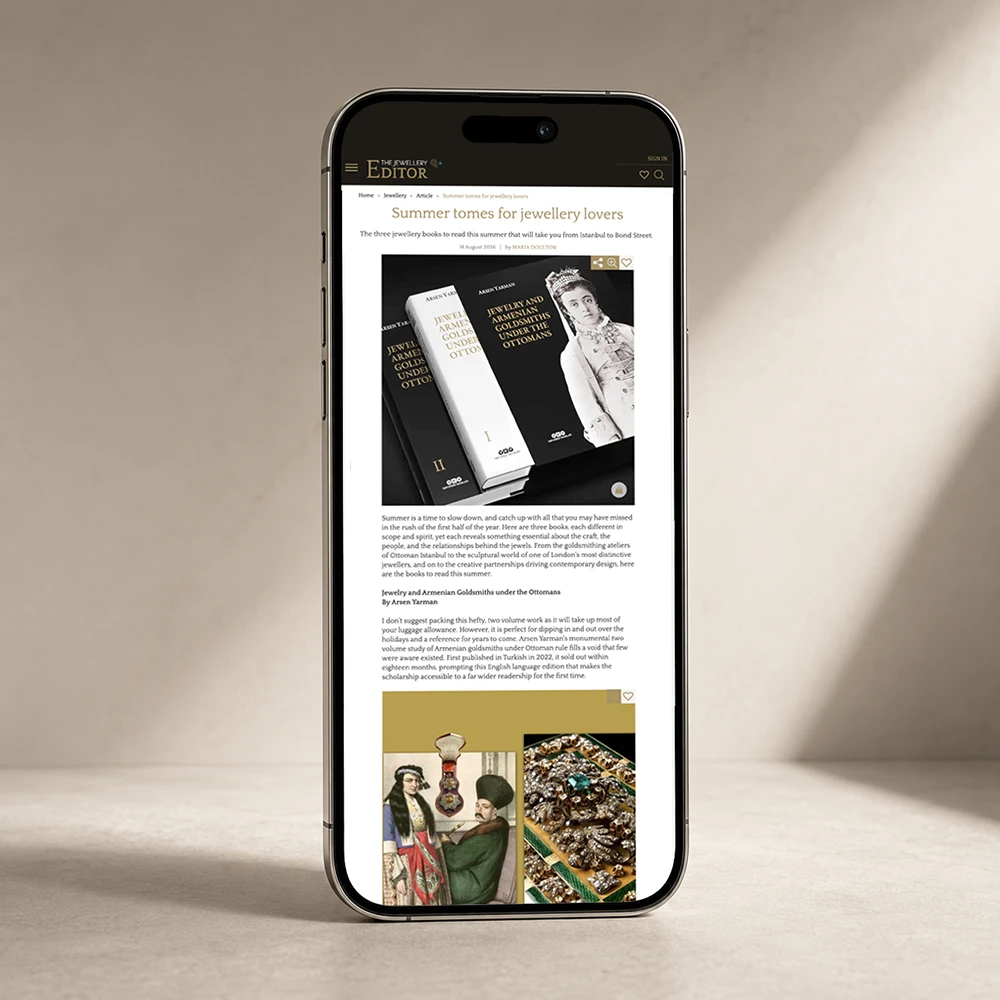
I don’t suggest packing this hefty, two volume work as it will take up most of your luggage allowance. However, it is perfect for dipping in and out over the holidays and a reference for years to come. Arsen Yarman’s monumental two volume study of Armenian goldsmiths under Ottoman rule fills a void that few were aware existed. First published in Turkish in 2022, it sold out within eighteen months, prompting this English language edition that makes the scholarship accessible to a far wider readership for the first time.
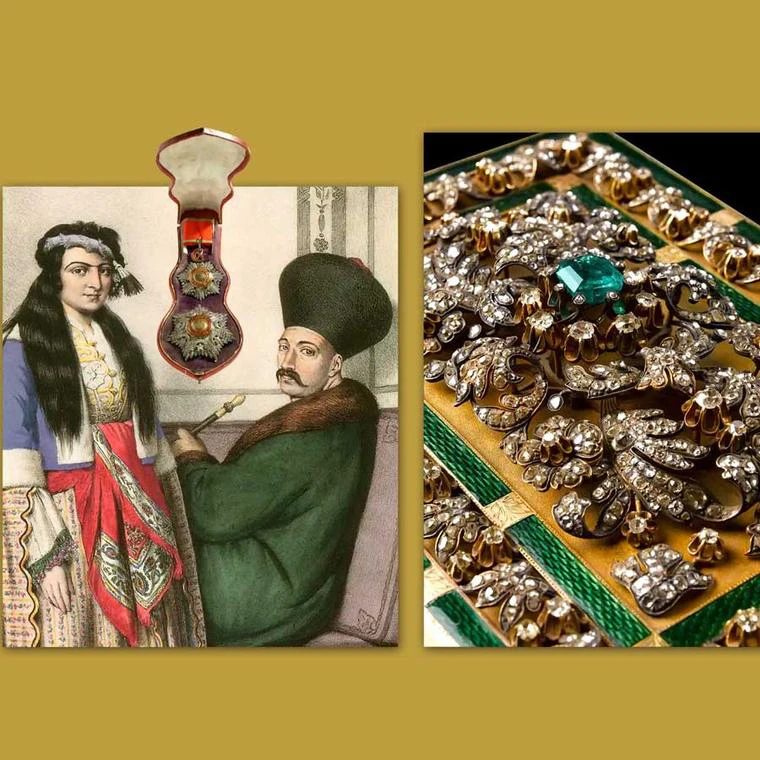
The scope is extraordinary. Spanning the 16th to the 20th century, Yarman traces the Armenian goldsmiths who were, for centuries, the creative engine of Ottoman jewellery. He reveals where the precious stones came from, where they were processed, who designed the jewels and where, who executed these designs, and who wore them, inside and outside the palace. This is a world in which jewellery designs were hand drawn with a pencil, diamonds were cut using foot pedals, and precious minerals were shaped by manual dexterity and hand drills.
Volume I comprises seven chapters, Volume II a further six, and together they present Ottoman and Armenian documents, many published here for the first time. The visual material alone is reason enough to own the book: jewellery from across four centuries, orders and medals, jewellers’ seals, liturgical objects, silver, watches, arms and swords, models, and original jewellery drawings. This is primary source material of the highest order.
Yarman also explores the human dimension by tracing the families who practised the craft for generations, some of whom continue to do so today, and describes what he calls their bittersweet relationship with the palace. The personal stories, accompanied by fascinating historical anecdotes, add colour to what might otherwise be a more academic accomplishment.
Over hundreds of years, Armenian goldsmiths developed the art of jewellery with peerless workmanship and elegant designs. That their contribution has been so poorly documented until now makes Yarman’s achievement all the more significant. As he writes in his closing pages, the interest sparked by this research motivates him to study the worldwide activities of Armenian goldsmiths. He knows it would entail more effort and labour than the present book, but feels he has the strength and courage to start a new journey. For anyone who cares about the deep history of goldsmithing, this is essential reading.